

Author: Elaine Fritz
I am a horticulturist & master gardener who changes lives and gardens with togetherness, wonder, and transformation.
This is what happens when degrees in, interior design, horticulture, 15 years of park management AND being a mom to a deafblind kid.
MONARCH BUTTERFLY LESSON PLAN
OBJECTIVE: Students will learn about the life stages of the Monarch Butterfly Life Cycle
Procedure: Read “A Very Hungry Caterpillar” by Eric Carle, and show the caterpillar changing into a butterfly. (can make a story box with the other items listed in the story for special needs, or visually impaired kids)
Go outside and find milkweed.
Hopefully find a caterpillar and see butterfly.
Observe Caterpillars, can journal over time and record observations like how many leaves it eats, size, date it pupates.
Color lifecycle page
Talk through goals with kids during the hike and observations.
GOALS:
Butterfly lays an egg on Milkweed
Where do the caterpillars live? Milkweed in gardens, fields, ditches, ponds
What do they eat? Only Milkweed. Many leaves a day.
How long does it take for a Caterpillar to be full grown and ready to become a chrysalis? (pupate) 9-14 days. Warm weather makes it faster
What happens when it is time for the caterpillars to become a chrysalis? The caterpillar finds a safe place to hang upside down, like a “J” , attaches and starts the process of becoming a chrysalis (pupate).
How does it turn into a chrysalis? It sheds it’s skin by wiggling. The skin on its back splits up the middle and the chrysalis appears.
What does the chrysalis look like? It is green with a beautiful golden necklace.
How do you know when the butterfly will emerge? The chrysalis becomes darker and you can see the wings through the shell.
What happens next? The chrysalis splits and the butterfly emerges.
What does the butterfly look like? Its wings are shriveled and has a black fat body. It starts to flap its wings to pump fluid into its wings so they start to grow big enough to fly. The butterfly will hang very still while it dries. Then it will fly away.
Ask the students to recall stages 1, 2, 3. And review what the students have learned about the habitat of caterpillars, chrysalis stage and signs the butterfly is ready to fly.
VOCABULARY: Caterpillars, Chrysalis, Milkweed, pupate, butterfly, lifecycle
How to Find Monarch Caterpillars in South Dakota
It’s easier then you think to experience the wonder and transformation of a butterfly.
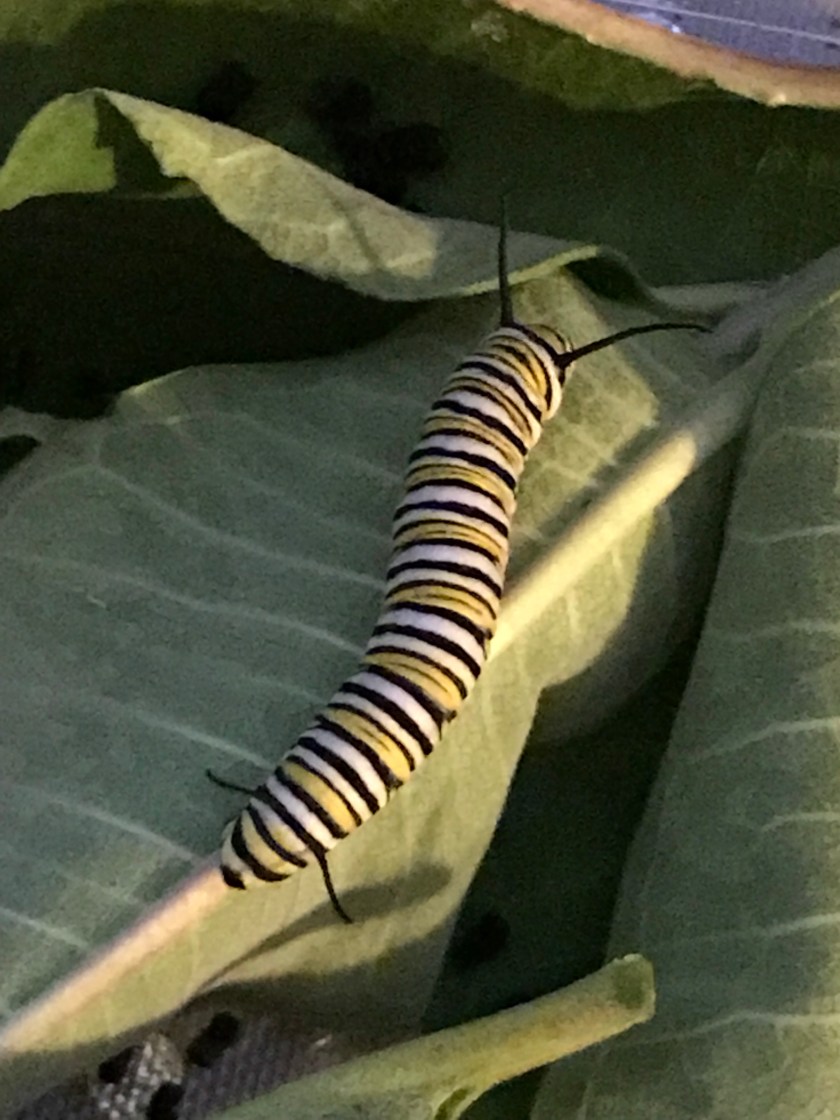 Monarchs only lay their eggs on Milkweed. That’s where you will find Caterpillars like this one. When they hatch, they are very small.
In South Dakota we have several varieties of native milkweed. Common milkweed is tall with balls of gorgeous pink flowers that smell like heaven.  swamp milkweed is more dainty and found in wet locations. I found cats today in the flowers of a plant. I also saw a monarch butterfly land on a swamp milkweed. I will keep an eye on that one.
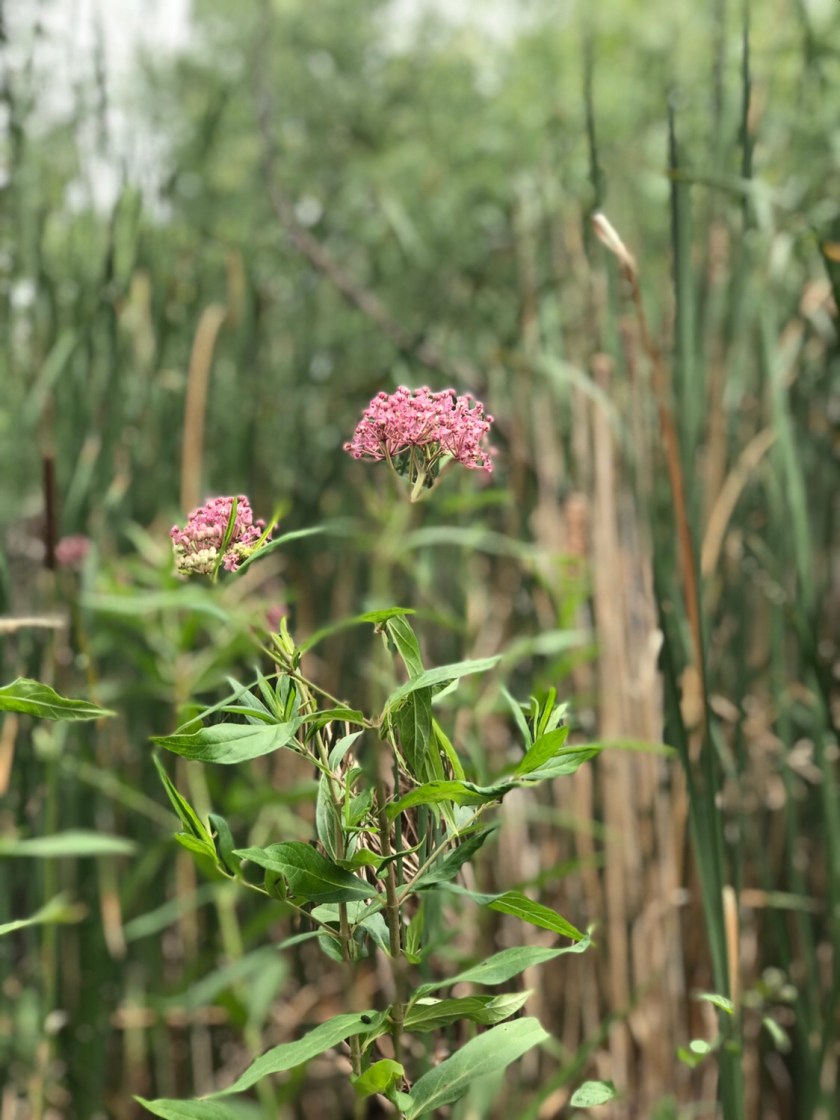 All they eat is milkweed.
In August, I will start tagging them for their flight to Mexico. You can purchase the tags at Monarchwatch.org.
You can find the plants growing in parks, detention ponds and roadsides.
Garden Start Program Survey


Horticulture Therapy Presentation
Terrarium Design
Thank you for attending the presentation. Please download the power point, then contact me and tell me where you saw the presentation or what projects your up to.
Poisonous Weeds
Thank you for attending my presentation please download the powerpoint of the presentation. Then, contact me and tell me what your up to in your hiking, foraging and gardening.
EDIBLE WEEDS

PRESENTATION TOPICS
As a Master Gardener, I engage your classroom, audience or service group with scientifically research-based gardening or horticulture information and activities. I will customize the topics and activities to meet your needs.
Places Elaine has spoken at:
Brandon Valley, SD 3rd grade classroom: Seed Dispersal, Roots
The Outdoor Campus: Edible Weeds, poisonous Weeds
McCrory Gardens, Brookings, SD: Edible Weeds, poisonous Weeds,
Face painting for festivals
Horticulture Therapy
No, You Can’t Buy My Garden Shed….Here’s Why…
“This World is but a canvas to our imagination.” Henry David Thoreau
Every year, someone texts, emails, or stops by when I’m out working in the garden at my studio, in Baltic, SD. asking if I would sell my cute little shed.
I’m so! Flattered that the whimsy and joy of my shed captured your heart.
I used to wonder why it bothered me so much when someone would ask. One day I realized it brings me as much joy as it does for you.
So! Here is the story of the shed.
Our first next door neighbors built that shed. They were quiet men, Keith and Doug, with a neat and tidy yard, with a duck in the backyard and this cute little greenhouse shed.
Doug would putter around the yard everyday after work. My daughter, then a baby, and I would swing and play in our backyard.
My husband, agronomist Robert Fritz, works late into the evenings farming. So Robyn and I would play outside, and often end up sitting in the grass with Doug, chatting and tending the baby. Drinking ice tea, eating crackers, balmy June evenings, enjoying rural South Dakota.
Sometimes he would watch her for a few minutes so I could change out of my work clothes or feed the dog. I love things that are quintessential.
I think the greenhouse-shed was a kit. He used it to start tomatoes, and green peppers. He didn’t have a big garden. He used it mainly as a potting shed. He liked cactus.
A few years later, he developed lung cancer and died very quickly. Keith moved out. New neighbors moved in, Amanda and Josh.
After a couple years, Josh asked me if I wanted the shed. They never used it.
Of course! I want the shed! Who wouldn’t!
It was a pain in the ass to move it. It was. We brought the skid steer from the farm over but the ground was too soft, and it wouldn’t fit through the other gate.
We ended up taking it apart, putting the pieces in the bucket and hauling it to my shop, where we put it back together.
My workshop is an old bar and grill. Outside the bar, on the west side of the building is a concrete slab where the grease bin was for the restaurant. We rebuilt the shed on the slab. I painted, and added quintessential decor. A window box of red geraniums, a delightful patch of Zinnias, Four-O-Clocks and Morning glories>
I admit. It is pinterest worthy. For me, my garden aesthetic is all about the quintessential whimsical cottage look. And I can help you get that look too, with your own shed.
 Elaine Fritz, South Dakota Master Gardener